|
|
|
|
|
Sugar Boat Days |
|
|
|
In 1940 I requested and received a transfer to the Asiatic Fleet so that I could serve with my brother in USS Langley. I could not be transferred directly to Langley. My orders read "for further assignment". When I arrived in Manila I found that I had been assigned to USS Canopus, The tender for SubRon 5. I used to look at the boats nested alongside and wonder how duty on one of them would be. I soon found out, that not all submarine sailors went to sub school at New London. Many of us went from the tender direct to a sub where we got on the job training.
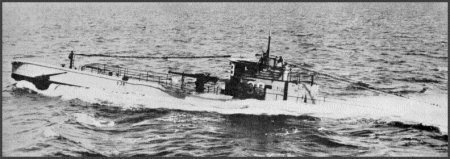
A short time later I was told to pack my bag and report to USS S39 SS144 alongside Canopus. After reporting aboard I was turned over to Chief Torpedoman "Pop" Bridges the COB. As I later learned Chief Bridges was an authentic old salt. He had been in L boats during WW1 and he had a wealth of sea stories. He was sent back to the States in 1941 just before the war started. I ran into him in San Diego in 1950 and found out that he had made 5 patrol runs in WW2 before the Navy decided that he was too old for sub duty. His face was a map of Ireland and if he were ever portrayed in a movie Barry Fitzgerald would have been perfect for the part. He assigned me a bunk and a locker and entered me on the watch, quarter and station bill. I was assigned to the engine room and my boss was Ralph Scalia MM1c. He was my mentor while I was qualifying and despite the difference in rank (I was a F2c) we became good friends. The engine room on an S boat wasn't very big but it was intimidating to me. The largest engine room I had ever seen was a Model A Ford. The main engines, in fact the only engines, as the S boats had no auxiliary engine, were massive 8-cylinder air injection Nelsecos. There were no lightweight metals in their makeup. As I recall each piston and connecting rod assembly weighed 900 pounds. Each engine, there were two, was connected to the motor generator by a huge drum clutch. When the ship submerged the clutch was disengaged and the motor took over. The engines did not reverse. In order to back down the engine had to be stopped and the clutch disengaged to allow the motor to reverse. The motors also were the generators. While battery charging in port the tail-shaft was disconnected by means of a large splined connector. The system wasn't pretty, but it worked. The thought that crossed my mind as I viewed this complex system, was that I would have to learn all of it. The boat was in the midst of a tender refit so we didn't go to sea for a couple of weeks. During this time I became intimately acquainted with the starboard engine which was Scalia's responsibility. Each connecting rod bearing had to be checked for proper clearance. The rod bearings were bolted together with one-inch bolts and two-inch nuts. A torque wrench was not part of our tool kit. It was strictly sledgehammer mechanics. I lay on my back holding a forty pound slugging wrench and looking up at Scalia swinging a 16-LB sledgehammer. I had visions of my head being pulped but he never missed the wrench. I wondered if I had done the right thing by changing my rate to fireman. While in port we observed tropical working hours. Reveille was at 0530, breakfast was at 0600, and quarters were at 0630. We worked right on through to 1330. Liberty call came at 1400. I generally stayed aboard in the afternoon even though I rated liberty two days out of three. That gave me plenty of opportunity to dive bilges, trace systems, and fill in my notebook. There were a couple of other non-quals besides me and we worked together. The old hands let us know in a lot of subtle ways that we were somewhat inferior to them, but they never refused to help us. The crew's quarters were in the forward battery. The head was also located there. Now, that was a contraption designed by the devil. The contents of the bowl were flushed into a lower chamber, an accumulator air tank was charged, a sea valve opened, and the contents were ejected overboard, providing that everything was done correctly and in the right sequence. It was a rare S boat sailor who never had a flareback. NOTE: We called it an Inboard Vent in the Nuke boats. With most of the crew ashore on liberty, the duty section generally slept topside in cots unless it rained. We had an awning, but there wasn't room under it for everyone. The new boys had to sleep below. The crew's mess was in the after battery. There was just room enough between the galley range, the sink, and the main switchboard to set up two mess tables. At sea, we had to eat in shifts. The food was excellent. One of our cooks, Walter Schoenrock was actually a baker, but he was trying make Chief Commissary Steward and he needed experience in a galley, so he transferred aboard. He turned out to be a great cook, but it was his baking that made us the envy of all the boats in the division. We had fresh bread, donuts, cakes, and pies that were better than Mother ever made. The refit was finally over and we went to sea for a day to make a couple of dives. I had stood my first engine room watch while we were charging batteries in port, but now I could learn about watch standing underway. This would be one more step towards qualifying. When we got to our assigned area, the word was passed to rig for dive. I went through the engine room checklist under Scalia's watchful eye. In those days before the war we didn't make section dives, it was an all hands evolution. When we went to diving stations, I was directed to stay out of the way and watch. Pretty soon I heard a loud horn, the engines were stopped, and it grew pretty quiet. Finally I asked Scalia, "when we were going to dive?" He looked at me as if I were an idiot child and informed me that we had been submerged for ten minutes. There was no down angle to speak of, we just sort of settled in the water. I don't know what I expected, but that wasn't it. As I said earlier, we non-sub school graduates got on the job training. There was no escape tower in the Philippines, but we qualified on the use of the lung, anyway. We were taken out on the Pigeon, the rescue vessel where we were put over the side in large diving bell. A master diver accompanied us and we made simulated escapes from successively lower depths until we finally made it from 100 feet. As 1941 wore on it became apparent that we were going to war. We really didn't consider Japan much of a foe then. How little we knew. We started spending more time at sea, sometimes for a week at a time. I qualified on the bow planes, stern planes, helm, and stood lookout watches. I was getting closer to those dolphins. I was assigned as a mess-cook and while working on my notebook, I was also studying for the fireman 1c exam. It all came together in early summer of 1941. I made Fireman 1c and qualified all in the same month. My pay as a F1c was 60 dollars a month and my sub pay was 25 dollars a month. I was making as much as the base pay of a chief petty officer! The icing on the cake though, was the dolphins I sewed onto the lower right sleeve of my whites. I now felt that I belonged. I haven't mentioned our officers. Our captain, LT James Coe was the finest skipper I ever sailed with. Many members of the crew were married and all the dependents were sent back to the States. This caused a few morale problems and the captain saw to it that we had plenty of recreation. A lot of times at sea we were in the company of S 38, whose captain, LT "Moon" Chapple was Captain Coe's running mate from academy days. They would play chess by blinker light with 25 cases of beer as the stakes. The two crews, generally at a ballgame, consumed the beer. Returning to Manila as soon as we passed Corregidor there would be a race to the breakwater again with 25 cases of beer as the stakes. They even challenged each other to a liar's contest, which the 39 boat won hands down. We had a 1c Torpedoman by the name of Earl Nave. He later became the COB when Pop Bridges departed. Nave possessed a wealth of sea stories that he could tell with a perfectly straight face. He was unbeatable. The junior officers were all Annapolis graduates. They were firm but fair and never arbitrary. They treated the enlisted men like human beings. They were friendly but they never crossed the line. Most of them went on to distinguished careers in the Navy, some as Submarine CO's in WW2 When war actually broke out I was on Canopus and missed S 39's first patrol run. Canopus was moved to Corregidor and eventually S 39 came back in for a re-supply and I was home again. We went south out of the Philippines and on to Java encountering no enemy shipping on the way. We needed some repairs to the clutch on the port engine. The bronze shoes were worn so badly that they wouldn't hold. Wedges had to be driven between the shoes and the drum so the clutch would hold. That presented a problem, as the wedges had to be pried out when we dove, so the clutch could be disengaged. This really slowed up our dives. We finally got to Surabaya and went into the navy yard there. The Dutch treated us very well and we were able to get some new bronze clutch shoes made. I got sick there and went to the hospital and the S 39 and I parted company for good. I went on to make 9 more runs on two boats and S 39 went on the rocks off of Australia and was lost. All hands were saved, however. NOTE 1: LCDR James W. Coe made three war patrols on S-39 and three War patrols as CO of the USS Skipjack. He was lost along with all hands on his first war patrol as CO of the USS Cisco (SS 290). NOTE 2: Walter Schoenrock made Chief Ship's Steward (CSS), but departed on eternal patrol along with the USS Tullibee (SS 284) on March 26, 1944. NOTE 3: Tom has included some photographs with his story. The S-39 surfacing is shown at the beginning of the article. Tom also included photos of Showering On Deck, the Instructions For Using The Head (restroom for lubbers), and a group photo of the Engineering Gang (Thats Tom at the lower left of the picture). NOTE 4: This article is the property of Tom Parks and The S Boats. It may not be reproduced for any purpose without the express written consent of the author or the Webmaster. |
|
This page was updated
September 28, 2025 |